
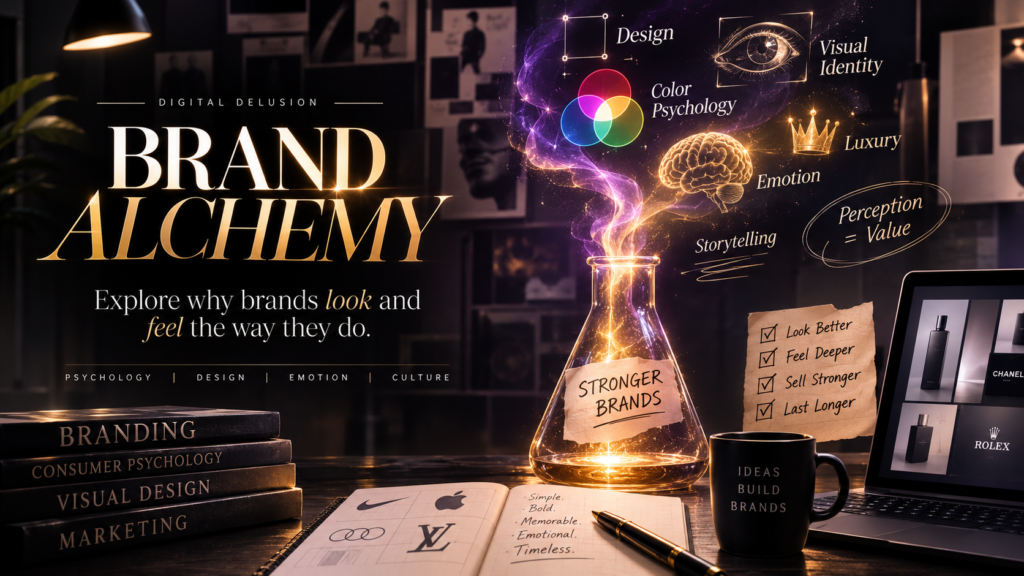
The Brand Alchemy series is built around one central idea:
Great brands are not created by accident—they’re crafted by combining psychology, design, emotion, culture, and strategy. Like ancient alchemists tried to turn ordinary metals into gold, modern brands transform ordinary products into something people desire, trust, and remember.
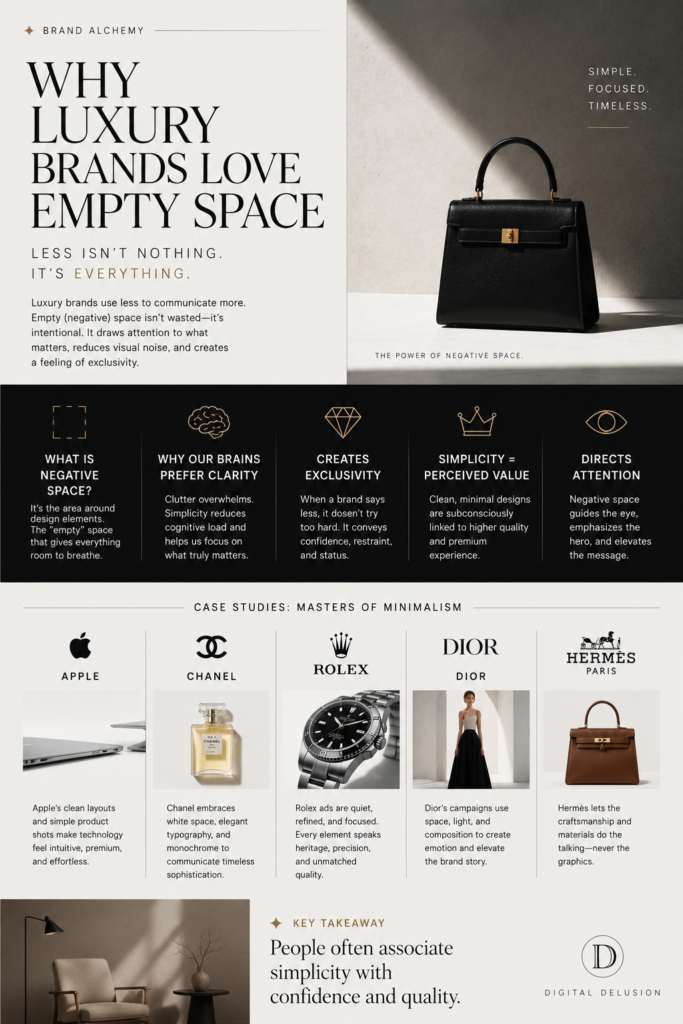
Why Luxury Brands Love Empty Space.
Core Idea
Luxury brands use less to communicate more.
Empty (negative) space isn’t wasted—it’s intentional. It draws attention to what matters, reduces visual noise, and creates a feeling of exclusivity.
What You’ll Learn
- What white/negative space is
- Why our brains prefer uncluttered designs
- How luxury brands create exclusivity
- The relationship between simplicity and perceived value
- Case studies (Apple, Chanel, Rolex, Dior)
Key Takeaway
People often associate simplicity with confidence and quality.
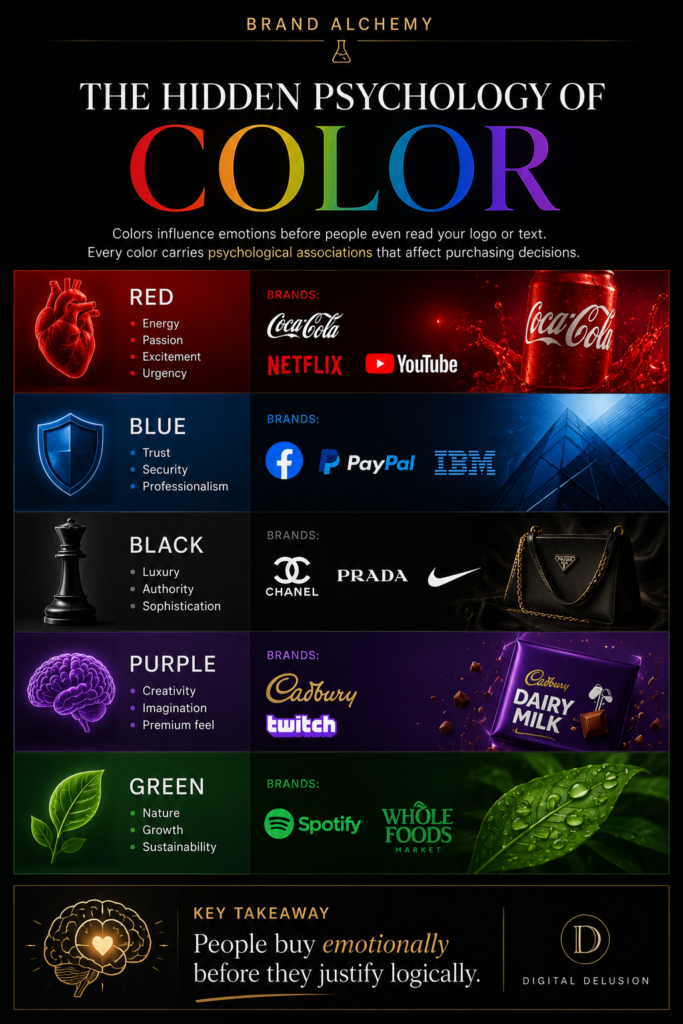
The Hidden Psychology of Color.
Core Idea
Colors influence emotions before people even read your logo or text.
Every color carries psychological associations that affect purchasing decisions.
What You’ll Learn
Red
- Energy
- Passion
- Excitement
- Urgency
Brands:
- Coca-Cola
- Netflix
- YouTube
Blue
- Trust
- Security
- Professionalism
Brands:
- PayPal
- IBM
Black
- Luxury
- Authority
- Sophistication
Brands:
- Chanel
- Prada
- Nike
Purple
- Creativity
- Imagination
- Premium feel
Brands:
- Cadbury
- Twitch
Green
- Nature
- Growth
- Sustainability
Brands:
- Spotify
- Whole Foods
Key Takeaway
People buy emotionally before they justify logically.
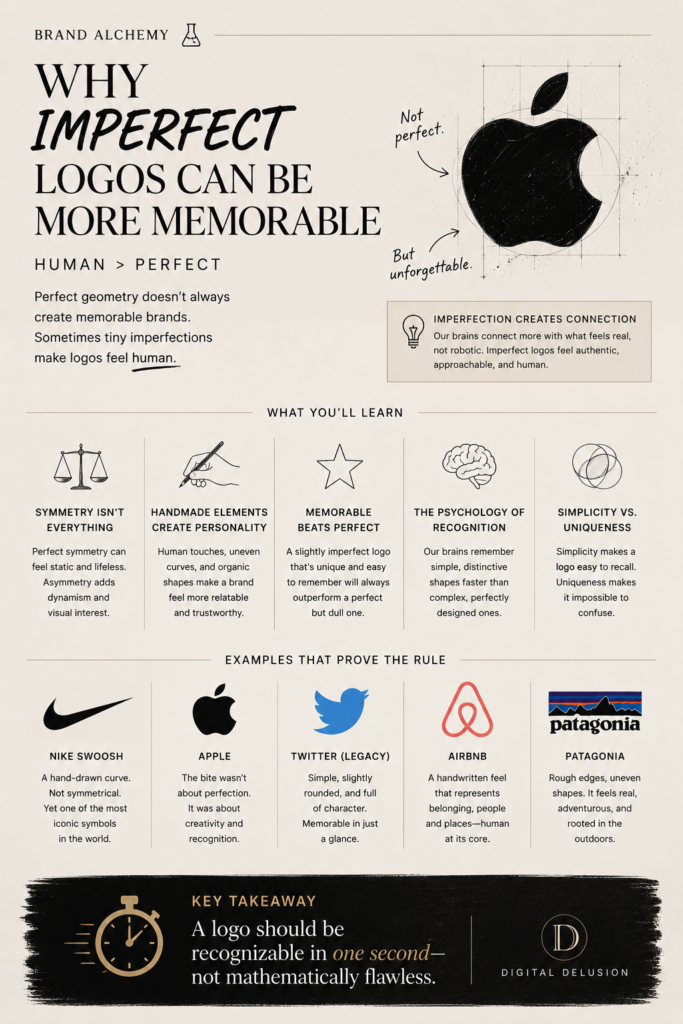
Why Imperfect Logos Can Be More Memorable.
Core Idea
Perfect geometry doesn’t always create memorable brands.
Sometimes tiny imperfections make logos feel human.
What You’ll Learn
- Why symmetry isn’t everything
- Why handmade elements create personality
- Why memorable beats perfect
- The psychology of recognition
- Simplicity vs uniqueness
Examples
- Nike Swoosh
- Apple
- Twitter (legacy)
- Airbnb
- Patagonia
Key Takeaway
A logo should be recognizable in one second—not mathematically flawless.
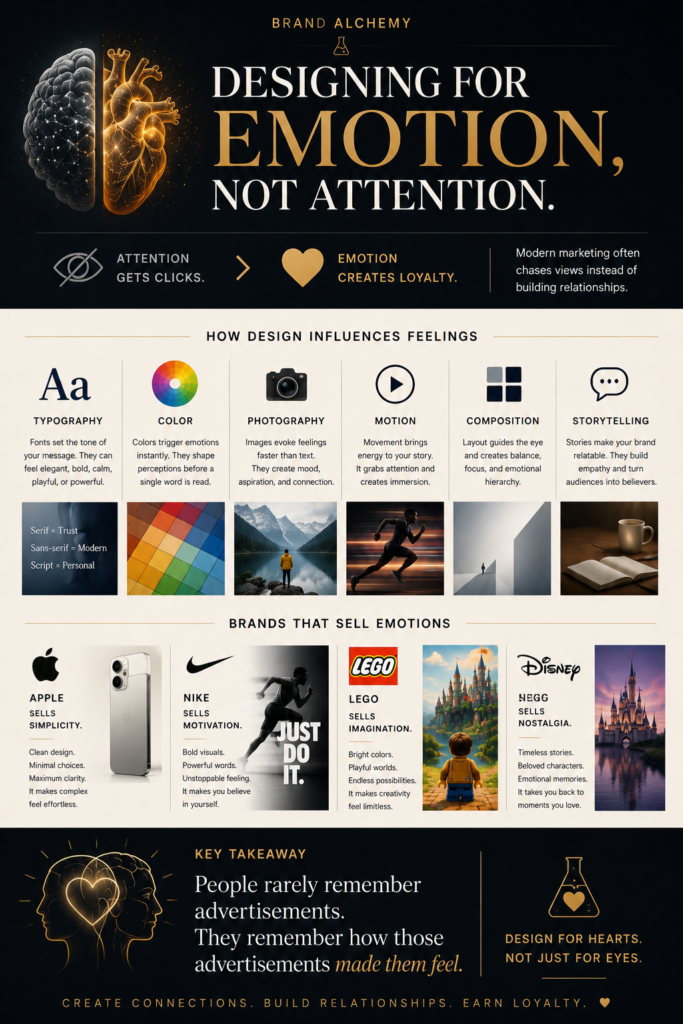
Designing for Emotion, Not Attention.
Core Idea
Attention gets clicks.
Emotion creates loyalty.
Modern marketing often chases views instead of building relationships.
What You’ll Learn
How design influences feelings through:
- Typography
- Color
- Photography
- Motion
- Composition
- Storytelling
Examples
Apple sells simplicity.
Nike sells motivation.
LEGO sells imagination.
Disney sells nostalgia.
Key Takeaway
People rarely remember advertisements.
They remember how those advertisements made them feel.
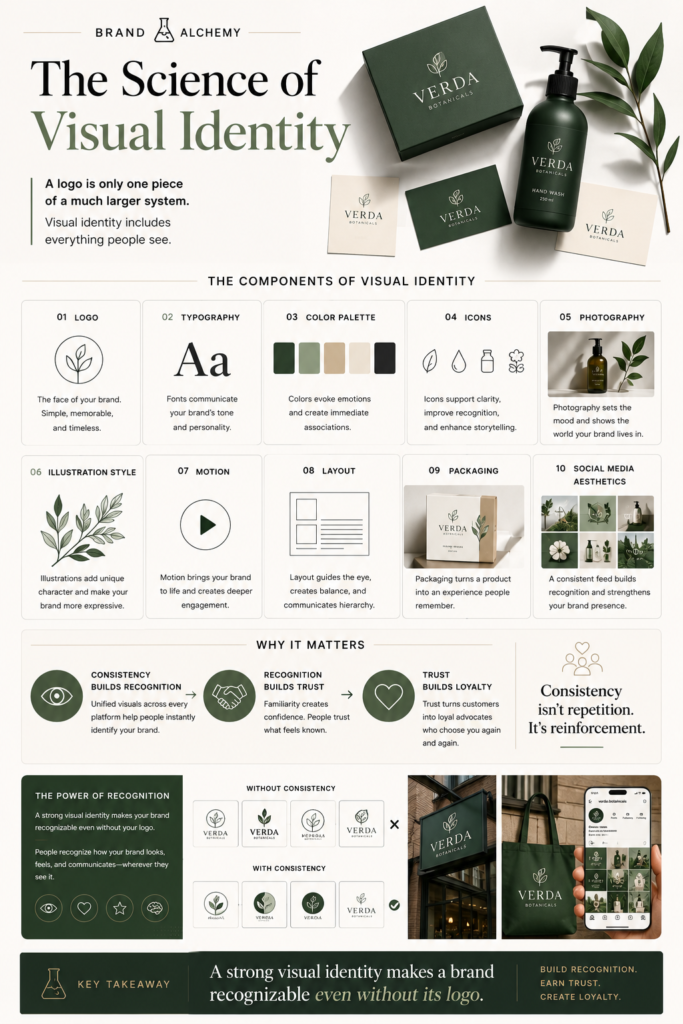
The Science of Visual Identity.
Core Idea
A logo is only one piece of a much larger system.
Visual identity includes everything people see.
Components
- Logo
- Typography
- Color palette
- Icons
- Photography
- Illustration style
- Motion
- Layout
- Packaging
- Social media aesthetics
Why It Matters
Consistency builds recognition.
Recognition builds trust.
Trust builds loyalty.
Key Takeaway
A strong visual identity makes a brand recognizable even without its logo.
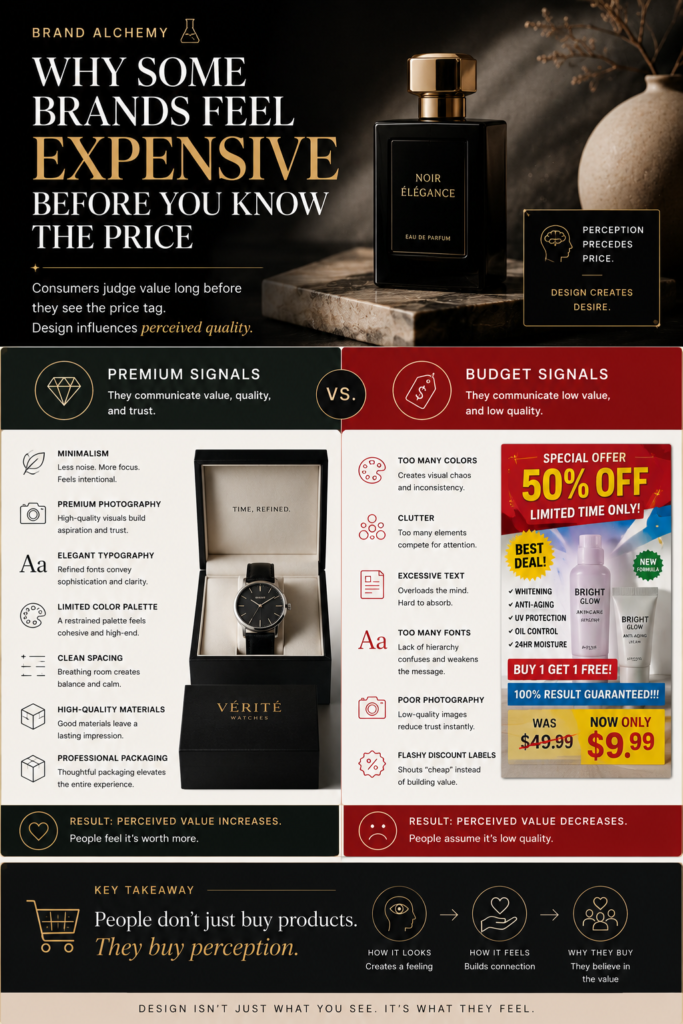
Why Some Brands Feel Expensive Before You Know the Price.
Core Idea
Consumers judge value long before they see the price tag.
Design influences perceived quality.
Premium Signals
- Minimalism
- Premium photography
- Elegant typography
- Limited color palette
- Clean spacing
- High-quality materials
- Professional packaging
Budget Signals
- Too many colors
- Clutter
- Excessive text
- Too many fonts
- Poor photography
- Flashy discount labels
Key Takeaway
People don’t just buy products.
They buy perception.
Conclusion.
Great brands aren’t defined by what they sell—they’re defined by how they’re perceived.
Long before a customer reads the price tag, compares features, or studies specifications, they’ve already formed an impression. Every design decision, from typography and color to spacing, photography, and packaging, quietly communicates a message about quality, trust, and value. Premium brands understand that perception isn’t an accident; it’s the result of consistent, intentional design.
A visually cohesive identity doesn’t just make a brand attractive—it makes it recognizable, memorable, and credible. When every touchpoint tells the same story, customers begin to associate your brand with reliability and excellence. Over time, that consistency evolves into trust, and trust evolves into loyalty.
Whether you’re building a global brand or launching your first business, remember this: people rarely buy a product based on logic alone. They buy the feeling, confidence, and promise your brand represents.
At Digital Delusion, we believe exceptional branding isn’t about chasing trends—it’s about understanding the psychology behind design and using it to create meaningful, lasting connections. Because in the end, people don’t just buy products.
They buy perception.